
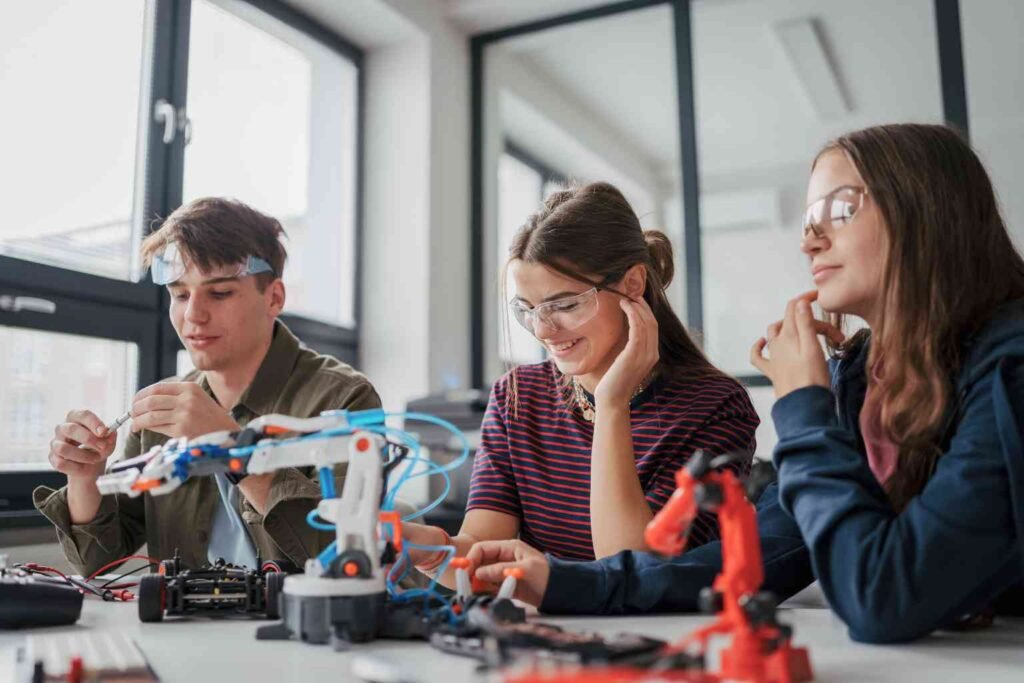
Education today focuses on preparing students for real jobs, not just teaching theories. In the past, academic programs leaned heavily on concepts, but now schools and universities are blending classroom learning with practical skills. Career-focused programs give students hands-on experience, helping them build confidence and apply what they learn directly in the workplace. This mix of study and practice makes them ready to succeed in modern careers.
1. Career Focused Education Programs
At that stage, career focused education programs can be seen as learning systems aimed at preparing students for particular careers or sectors. These programs typically combine hands-on technical training, real-world projects, internships, and skills development with traditional academic subjects.
2. The Rise of Career Oriented Education
Practical skills are being appreciated by students and employers. There is a tendency for businesses to seek graduates who are able to hit the ground running. For example, career focused programs offer opportunities to integrate learning from the classroom into professional workspaces.
3. Advantages of Career Oriented Education
There are many benefits for students of career focused programs:
- Real-life job practical training
- Internships and exposure to the industry
- Technical and professional skills development
- Improved career readiness after graduation
- Improved alignment of education to industry needs
Such exposure provides students with preparation for future careers.
4. Function of Vocational and Technical Training
Career focused learning includes vocational and technical education. They include specialized training programs in information technology, healthcare, engineering and hospitality or skilled trades.
5. Why Students Enroll in Career Focused Programs
Several factors have prompted students to gravitate toward these programs:
- Reaching the job market more quickly
- Practical skills that employers value
- Strong career pathways and industry links
- Opportunities for hands on learning
- Increased job opportunities after graduation
That is why career focused education and its alternatives are appealing to so many learners.
6. Industry Partnerships With Educational Institutions
This is the reason that many of the institutes today work in collaboration with the industries to frame and design programs which refer to careers. Apprenticeships, on the job training and real world projects abroad are some of the opportunities which companies offer to students for practical outshining.
7. How Technology Helps in Career Education
How does modern technology help broaden the career focused education. Digital simulations, online training platforms and virtual labs: A student can still practice their real world skills, even in the depths of remote learning.
8. Benefits for Employers
Career centered education also benefits employers because it generates job ready graduates with limited training. This streamlines hiring expenses and increases productivity.
9. Challenges in Implementing Career Programs
While career-based education certainly has its merits, it demands a high level of cooperation between academic institutions, industry bodies and policymakers. It’s a bit redundant but institutions have to have updated equipments with trained instructors in order to provide adequate training.
10. Education with a Focus on Careers: The Future
In an always evolving industry landscape, it can be predicted that career focus education programs will only continue to grow. As technology progresses and job markets evolve, education systems will most likely focus even harder on practical skills and career immediacy.
Key Takeaways
- Education programs aimed at getting students into the job market quicker, are becoming a mainstay of modern education systems
- They mix academic study with practical job skills
- Students learn through internships and training
- Like our job ready graduates, employers win
- Technology is democratizing access to career training
The benefit in this regard is that these programs bridge the gap between education and work.
FAQs:
Q1. What is career focused education?
A career-based education system providing vocational training and skills development to students.
Q2. A Utilitarian Approach: Why Are Career-Oriented Courses Gaining Traction?
They assist students in acquiring career-relevant skills and developing job readiness.
Q3. What are career focused education programs used for?
Technology, healthcare, engineering, hospitality, skilled trades.
Q4. Do these programs include internships?
Yes, most career oriented programs have an internship or industrial training component.
Q5. Does education focused on careers lead to better employment?
Yes, these programs teach students skills that employers want.